
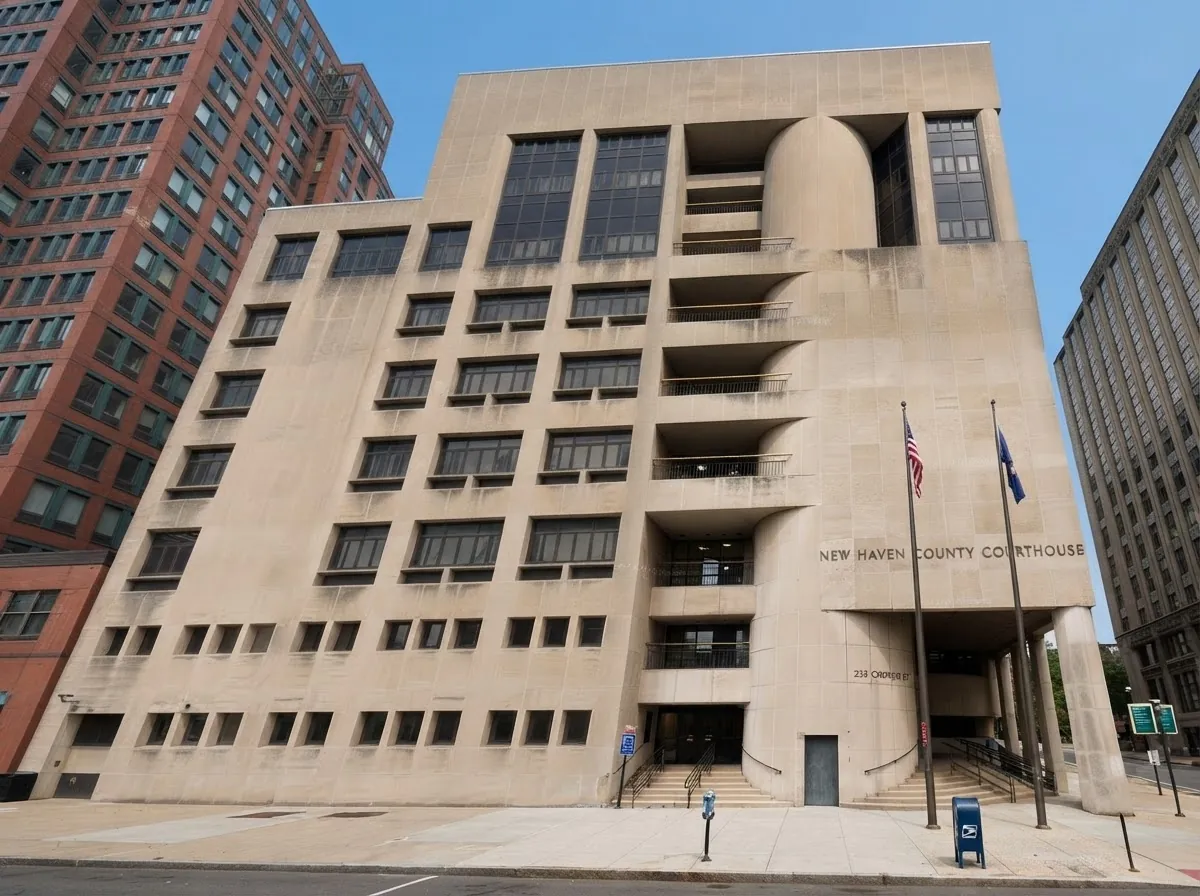
Court records in New Haven, Connecticut, are maintained by the court clerk's office and are accessible through official court portals, online tools, and directly at the clerk's office. NewHavenCourt.us is a convenient resource for finding publicly available information about court records in this county. Additionally, you can use the Connecticut Judicial Branch portals, federal court databases, and clerk's offices to obtain copies of documents and check cases.
New Haven Court System Overview
Connecticut has a unique court system: counties do not have their own county courts in the traditional sense. Instead, the state uses a unified centralized system called the Connecticut Superior Court, divided into judicial districts. New Haven belongs to the Judicial District of New Haven, which serves the city of New Haven and surrounding communities. The Superior Court in New Haven handles both criminal and civil cases, including family law and housing disputes. The main court is located at 235 Church Street, New Haven, CT 06510. Federal cases are handled by the United States District Court for the District of Connecticut, which also has an office in New Haven at 141 Church Street.
Courts Serving New Haven
Connecticut Superior Court — Judicial District of New Haven
Connecticut Superior Court — Geographic Area No. 23 (GA 23)
United States District Court, District of Connecticut — New Haven
New Haven Probate Court
Information about probate courts and their addresses by city can be found on the Connecticut Probate Courts website.
What Types of Cases New Haven Courts Hear
The courts serving New Haven handle a wide range of cases. Here are the main categories:
- Criminal cases — felonies and misdemeanors
- Traffic violations and infractions
- Civil lawsuits, including damage claims
- Small claims
- Family law: divorce, custody, alimony
- Probate, guardianship, and conservatorship cases — through Probate Court
- Juvenile and child protection cases
- Adoption
- Housing disputes (Housing Session)
District Court Cases in New Haven
In the Connecticut system, there are no separate "district courts" at the state level — the Superior Court is the court of general jurisdiction. In the Judicial District of New Haven, this court handles serious criminal cases (felonies), large civil lawsuits, family cases, and appeals from Geographic Area courts. Criminal cases reach the court after charges are filed or through a grand jury indictment. Cases are administratively assigned to judges. A judge presides alone; a jury is convened for criminal cases at the defendant's request or in civil cases at a party's request.
Magistrate Court Cases in New Haven
Functions similar to a magistrate court in Connecticut are performed by the Geographic Area Court — in New Haven, this is GA 23 on Elm Street. Here, they handle:
- Misdemeanors and infractions
- Preliminary hearings in felony cases
- Traffic violations
- DUI cases — initial hearings
- Civil small claims up to $5,000
- Housing disputes
Small claims in Connecticut are limited to $5,000. Civil cases exceeding the jurisdiction of the GA court are transferred to the Superior Court in the Judicial District. Cases are assigned according to type and court workload.
Family Law, Probate, and Juvenile Matters in New Haven
Family Law. Divorce, custody, alimony, protective orders, and paternity cases are handled by the Family Division of the Superior Court in the Judicial District of New Haven. To obtain copies of divorce decrees, contact the court clerk's office directly — the Vital Records Office does not retain copies of divorce decrees.
Probate Matters. Inheritance, guardianship, conservatorship, and trust cases fall under the jurisdiction of the New Haven Probate Court. This court operates separately from the Superior Court and has its own office at 200 Orange Street.
Juvenile Matters. The Juvenile Matters Session of the Superior Court handles cases under the Juvenile Justice Act and the Child Protection Act. Juvenile case records are confidential under Connecticut law. For inquiries about juvenile cases, contact the Juvenile Matters office in New Haven at 203-503-6800.
How Cases Move Through the New Haven Court System
- Case Initiation. A criminal case begins with an arrest or warrant; a civil case begins with the filing of a complaint with the court clerk; a probate case begins with a petition.
- Judge Assignment. The clerk's office assigns the case to a specific judge or court session.
- First Hearing. In criminal cases, this is the arraignment, where the defendant enters a plea of guilty or not guilty. In civil cases, it is a scheduling conference.
- Pre-trial Phase. Parties exchange evidence (discovery), file motions, and negotiate plea agreements or settlements.
- Trial or Resolution. The case concludes with a jury verdict, judge's decision, settlement, or plea agreement.
- Post-Decision. The convicted person is sentenced; in civil cases, the judgment is enforced. Any party may appeal to the Connecticut Appellate Court.
Court Administration, Local Rules, and Public Access in New Haven
The courts in the Judicial District of New Haven are managed by an administrative judge appointed by the state's chief judge. The court clerk's office (Trial Court Administrator's Office) coordinates daily operations, scheduling, and staffing issues.
The local rules of procedure in Connecticut (Practice Book) apply uniformly across the state. Additional administrative directives are published on the Connecticut Judicial Branch portal.
Regarding public access:
- Most court records in Connecticut are publicly accessible, except for juvenile cases, sealed cases, and certain family records.
- Access to court cases is available through the Judicial Branch online portal or in person at the court clerk's office.
- Hearings are generally open to the public. Some sessions are conducted remotely via video — check with the specific court clerk's office.
To contact the Superior Court clerk's office in New Haven, call 203-503-6800.
Court Records and Related Court Resources in New Haven
- Online Case Search. The Connecticut Judicial Branch provides an online portal for searching civil and criminal cases. NewHavenCourt.us also helps navigate available public records.
- Criminal Records. Criminal history information is maintained by the Connecticut State Police and Judicial Branch. To check criminal history, use the State Police Bureau of Identification.
- Arrest Warrant Data. A monthly report on outstanding warrants is available on the Arrest Warrant Data portal.
- Inmate Search. The Connecticut Department of Correction allows searching for information about individuals under supervision. Information about the New Haven Correctional Center can also be found on the DOC website.
- Vital Records. Birth, marriage, and death certificates are issued by the State Vital Records Office.
- Police Reports. State Police incident reports are available through the Reports and Records portal.
- Probate Matters. Forms, instructions, and contact information for electronic filing are available on the Connecticut Probate Courts website.
- Property Records and GIS. The New Haven GIS Gallery allows viewing property information by address.